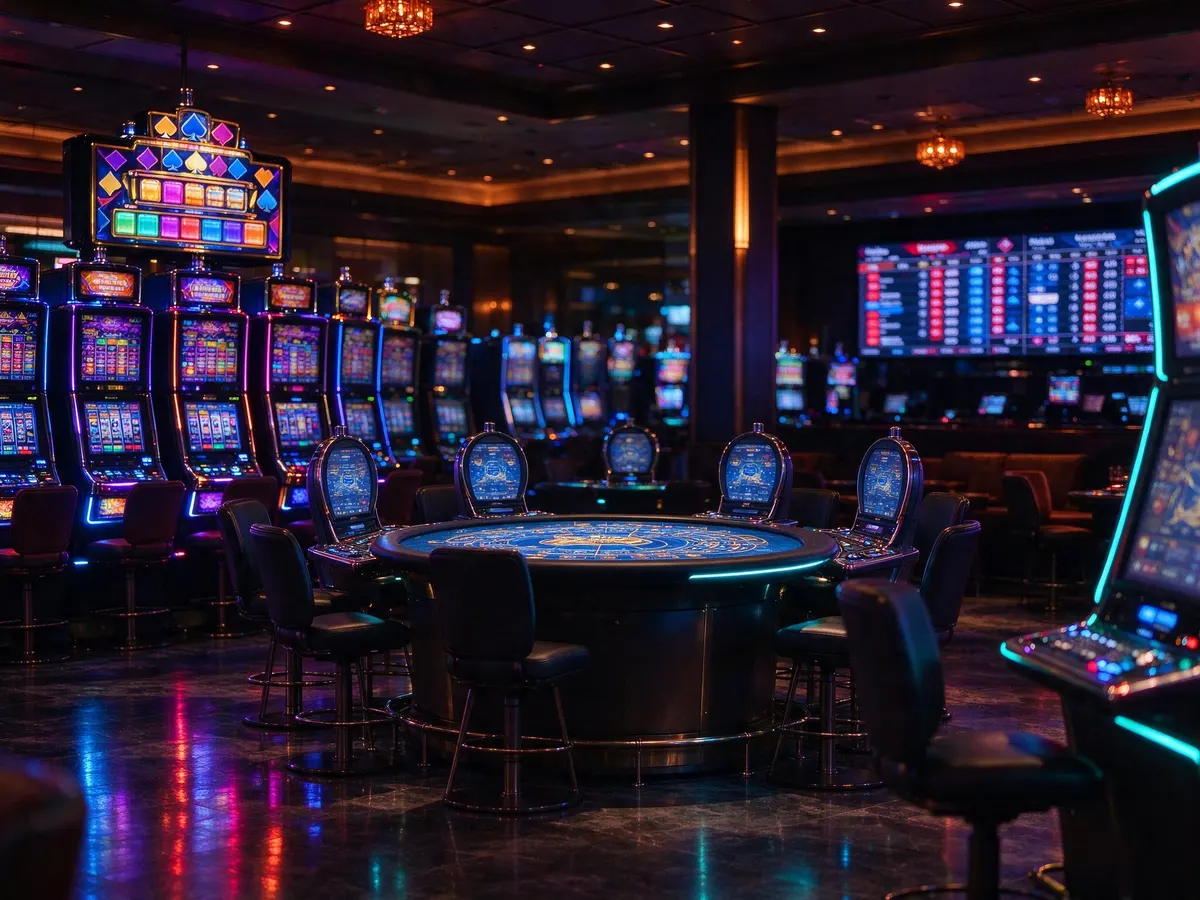
One booth, number 2452, and not a single sportsbook product on it
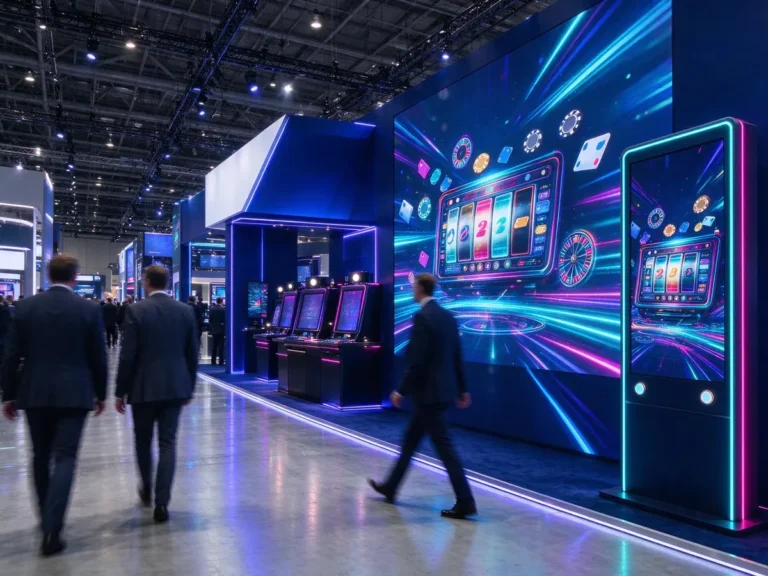
EGT’s whole pitch at G2E Las Vegas 2026 sits at booth 2452, and the headline act is a multi-level jackpot series called 3 Pots Link. Nothing in the announcement mentions sports betting. That absence is exactly why the showcase is worth reading if you work in or bet at a venue that runs a retail sportsbook, because the casino sportsbook technology trends that actually change retail floors rarely arrive labelled as betting technology. They arrive as cabinets, terminals and jackpot signage that quietly compete for the same square footage and the same customer.
Here is the claim the facts support: the hardware philosophy behind modern slot and electronic table game products is converging with the self-service betting terminal. Here is the claim they do not support: that EGT, or anyone else at this show, has shipped a system where your sports wager and your slot spin feed the same jackpot. People conflate the two constantly. The distinction decides whether “integrated venue” means anything or is just two businesses sharing a carpet.
What is actually in the EGT lineup
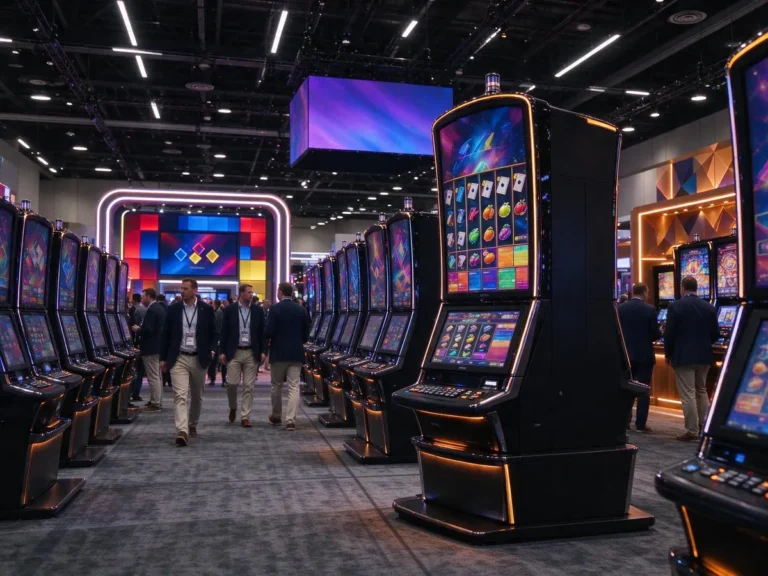
The Bulgarian manufacturer is bringing its newest releases alongside established sellers, with the 3 Pots Link series front and centre. Two named variants are in the showcase, 3 Pots Link Animals and 3 Pots Link Cherry. The company describes the series as combining randomly triggered bonus features with what it calls “metamorphic mechanics”, a term the release does not unpack, so treat it as marketing language until someone sees it on a screen. Alongside the slots, EGT is showing electronic table game solutions.
That is the full verifiable set of facts, and it is a short list. Among the many G2E Las Vegas exhibitors, EGT is not the biggest name on the floor. What makes the lineup useful as a signal is its shape: a linked jackpot system on one side, a terminal-based table game offering on the other. Both are products built for venues that need to generate more revenue from fewer staffed positions.
Why ETG casino gaming is the part sportsbook operators should watch
Electronic table games put roulette, baccarat or blackjack on a terminal rather than a felt, either fully automated or with one live dealer serving many seated players. The commercial logic is simple. A staffed table needs a dealer, a pit supervisor’s attention and a fixed footprint regardless of how many seats are filled. A bank of ETG positions needs none of that per seat, runs at a lower minimum bet, and can be switched on at 3am without a shift schedule.
Now look at a retail sportsbook. Its growth over the past decade has run on self-service betting terminals for the same reasons: more betting positions, less counter staff, no queue at kick-off. The two product categories arrived from different directions and ended up as the same object, a networked touchscreen that takes a wager, sits in a bank, and justifies itself on revenue per square foot.
| Floor position | Staffing per position | Typical placement | Pace of play |
|---|---|---|---|
| Staffed table game | Dealer plus pit oversight | Pit, central floor | Set by dealer and seat count |
| Electronic table game terminal | None to one shared dealer | Perimeter banks, stadium formats | Player-controlled, faster |
| Slot cabinet with linked jackpot | None | Banks around signage | Player-controlled, fastest |
| Self-service betting terminal | None | Sportsbook lounge, bar areas | Event-driven, bursty |
Once you see that table, the integrated venue stops being a slogan and becomes a layout problem. The sportsbook lounge is where people sit for three hours watching a game they have already bet on. Terminal-based casino product is the only casino product that fits in that space without rebuilding it. That is the real casino floor innovation story, and it is architectural rather than digital.
How a linked jackpot pays, and the number most players never see
A multi-level jackpot like 3 Pots Link is funded by diverting a slice of every qualifying wager into shared pots, which is why the base game pays less than the headline return suggests. The advertised return to player for a linked game includes the jackpot contribution, but you only ever receive that portion if you or someone on the link actually hits a pot. Most players never do.
Split it properly. Say a linked game publishes a total theoretical return in the typical slot range of roughly 94 to 97 per cent. Part of that sits in the base game and pays out continuously. Part of it sits in the pots, and across any single session it functions as a deduction. Lower pots on a multi-level system hit often enough to feel real; the top pot is a lottery. The house edge, the inverse of the published return, does not move in your favour because the jackpot exists. It just redistributes who gets paid, concentrating a share of the return into rare events.
EGT has not published game-specific return figures in this announcement, and I would not guess at them. The number that matters is on the machine’s own help screen or in the operator’s published game information, and if a venue cannot show it to you, that tells you something about the venue.
The condition almost nobody checks before calling it convergence
Shared floor space is not shared technology. For a venue to genuinely link its casino and sportsbook, three things have to be true at once: a single player account across both verticals, a wallet that moves funds between them without a manual cash-out, and a loyalty engine that credits sports turnover and slot turnover into the same tier. Miss any one of them and you have two separate businesses with a common entrance.
Regulation is where this usually breaks. Retail sports betting and casino gaming are frequently licensed under separate frameworks, with separate rules on promotional offers, and a linked jackpot fed by sports wagers would in many jurisdictions be a new product requiring its own approval rather than a feature toggle. That is the condition people forget to check when they read a trade show announcement and conclude the verticals are merging. The cabinets converge long before the compliance does.
So the honest read on retail sportsbook integration right now is that it is happening at the level of floor plan, staffing model and hardware procurement, and barely at all at the level of the jackpot or the wallet. Watch for the first supplier that announces a cross-vertical linked progressive with a named regulator’s approval attached. That is the moment the story changes, and it has not happened yet.
What to ask at booth 2452, and what no announcement will tell you
If you are walking the floor, the useful questions about a product like 3 Pots Link are not about the theme. Ask how many machines the link spans, how the pots are seeded and reseeded, and what share of turnover each level takes. Ask the ETG vendor how many positions one dealer can realistically supervise, because that ratio is what decides whether the product works in a sportsbook lounge or only in a dedicated pit.
What remains genuinely unsettled is whether bettors want casino product in their sportsbook at all. The seated sports customer is doing something slow and social; the terminal is designed for something fast and solitary. Putting one next to the other is a bet by the venue, not a proven outcome, and the G2E floor is where that bet gets placed every year before anyone knows the answer.
A final note worth keeping in view: every product described here is built with a mathematical edge in the house’s favour, and linked jackpots make that edge feel smaller than it is. Set a deposit or session limit before you sit down, use the cool-off and self-exclusion tools your operator is required to provide, and treat any of this as entertainment spending rather than a way to make money.
About the Author